:
: :
:
3-Point Summary
- A future-ready school develops academic excellence alongside critical thinking, creativity, digital literacy and life skills.
- The right curriculum, experienced teachers, modern facilities and strong extracurricular programmes all play a vital role in preparing students for long-term success.
- At Regent International School Malaysia, we combine the globally recognised Cambridge curriculum with holistic development opportunities to help students thrive in an evolving world.
Choosing a school is one of the most important decisions parents make for their child’s future. Beyond academic performance, today’s schools must prepare students to navigate technological advancements, global opportunities and changing career landscapes.
As parents explore educational options, factors such as curriculum quality, teaching standards, technology integration and student wellbeing have become increasingly important. Understanding what makes a school truly future-ready can help families make informed decisions that benefit their children for years to come.
Why Choosing the Right School Matters for Your Child’s Future
The skills required for future success extend far beyond examination results. Employers and universities increasingly value communication, collaboration, adaptability, creativity and problem-solving abilities.
A strong educational foundation helps students build confidence, develop resilience and prepare for higher education and future careers. This is why many families seek schools that combine academic rigour with personal development opportunities.
What Does a “Future-Ready School” Really Mean?
A future-ready school equips students with the knowledge, skills and mindset needed to succeed in an increasingly interconnected world.
These schools focus on:
- Academic excellence
- Critical thinking and problem-solving
- Digital literacy
- Global awareness
- Leadership development
- Emotional intelligence
- Communication skills
Schools offering internationally recognised programmes such as the Cambridge curriculum are often well-positioned to develop these competencies.
How Technology Is Transforming the Learning Experience
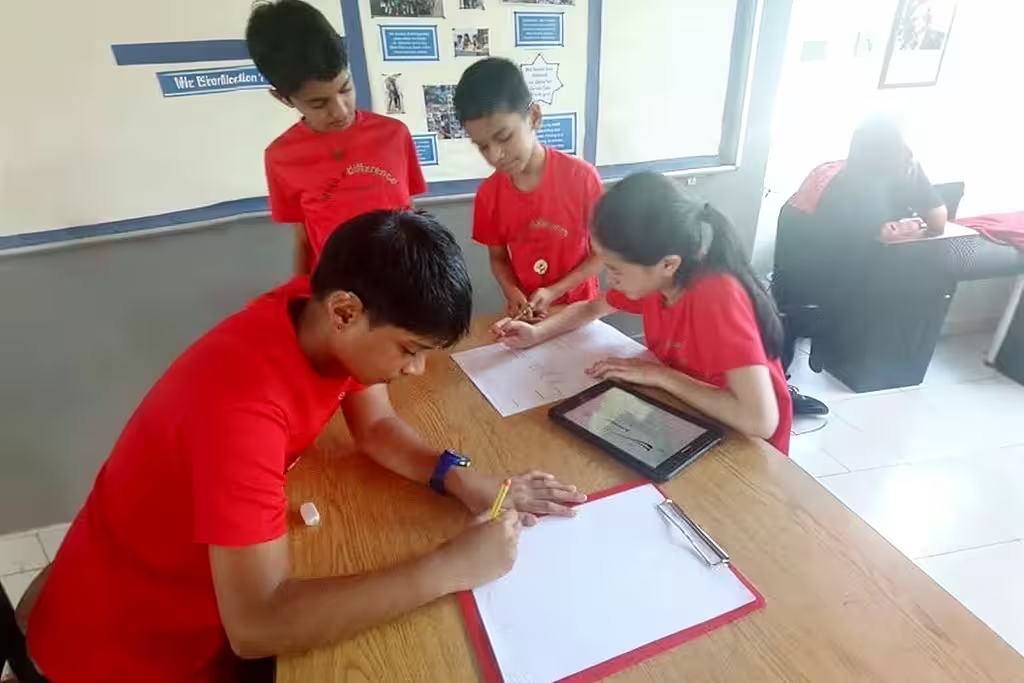
Technology has significantly reshaped education. Interactive classrooms, digital resources, virtual collaboration tools and personalised learning platforms enable students to engage with content more effectively.
Modern schools use technology to enhance learning rather than replace traditional teaching. Students gain valuable digital skills while maintaining strong academic foundations.
At Regent International School Malaysia, technology is integrated thoughtfully into the learning experience to support collaboration, creativity and innovation.
Step 1: Identify Your Child’s Needs and Learning Style
Every child learns differently. Some thrive in structured environments, while others excel through hands-on exploration and collaborative activities.
Consider:
- Academic strengths and challenges
- Learning preferences
- Interests and passions
- Personality traits
- Social development needs
Understanding your child’s unique profile can help narrow down suitable school options.
Step 2: Evaluate the Curriculum and Teaching Approach
The curriculum forms the foundation of a child’s educational journey. Parents should assess whether the curriculum promotes critical thinking, independent learning and future readiness.
Many families choose Cambridge education because it combines academic rigour with skills-based learning. The curriculum encourages enquiry, analysis and application rather than rote memorisation.
Programmes such as the Cambridge IGCSE are recognised worldwide and provide strong preparation for higher education.
We, at Regent, follow the Cambridge pathway because of its proven ability to nurture confident, independent learners.
Step 3: Check School Infrastructure and Facilities
A school’s environment significantly influences student learning and development.
Look for:
- Modern classrooms
- Science laboratories
- Libraries
- Sports facilities
- Performing arts spaces
- Technology-enabled learning environments
Quality facilities support both academic achievement and personal growth.
Step 4: Assess Teacher Quality and Student Support
Teachers remain the most important factor in a student’s educational experience.
When evaluating schools, consider:
- Teacher qualifications
- Professional development programmes
- Student-to-teacher ratios
- Academic support systems
- Pastoral care services
Strong student support ensures children feel safe, valued and motivated to learn.
At Regent International School Malaysia, our educators focus on both academic success and student wellbeing.
Step 5: Look at Extracurricular and Skill Development Programmes
Future success requires more than classroom learning.
Extracurricular activities help students develop:
- Leadership skills
- Teamwork
- Confidence
- Creativity
- Time management
- Communication abilities
Whether through sports, music, debating, robotics or community service, these experiences contribute significantly to personal development.
We, at Regent, offer a broad range of extracurricular opportunities designed to nurture well-rounded learners.
Step 6: Consider Location, Accessibility, and Environment
Practical considerations should not be overlooked.
Evaluate:
- Travel time
- Safety measures
- Campus environment
- Accessibility
- Community culture
A positive and supportive environment contributes to both academic performance and emotional wellbeing.
Step 7: Review School Reputation and Results
School performance indicators can provide valuable insights.
Review:
- Academic results
- University placements
- Student achievements
- Parent testimonials
- Accreditation and affiliations
Many parents researching the best private schools in Kuala Lumpur and the top secondary schools in Malaysia prioritise schools with strong academic records and holistic development programmes.
Comparing Schools: A Smarter Way to Decide
Creating a comparison framework can simplify decision-making.
|
Factor |
What to Check |
Why It Matters |
|
Curriculum |
International standards and flexibility |
Supports future academic pathways |
|
Teachers |
Qualifications and experience |
Impacts learning quality |
|
Facilities |
Learning and enrichment resources |
Enhances educational experiences |
|
Technology |
Digital learning capabilities |
Develops future-ready skills |
|
Student Support |
Counselling and wellbeing programmes |
Promotes holistic development |
|
Extracurricular Activities |
Variety and quality of programmes |
Builds life skills and confidence |
|
Academic Results |
Examination outcomes and university placements |
Indicates educational effectiveness |
How to Visit and Evaluate a School Effectively
School visits offer valuable opportunities to assess a school’s culture and environment.
During your visit:
- Observe classroom interactions
- Speak with teachers and students
- Explore facilities
- Ask about student support services
- Review curriculum pathways
- Understand extracurricular offerings
Pay attention to how welcomed and engaged students appear throughout the campus.
How Technology and Modern Learning Impact School Choice
Technology should support meaningful learning rather than simply adding digital tools to the classroom.
The best schools use technology to:
- Encourage collaboration
- Personalise learning experiences
- Build digital literacy
- Develop research skills
- Foster innovation
Parents should assess whether technology integration aligns with educational objectives and student wellbeing.
What Parents Should Prioritise
When selecting a school, parents should prioritise:
- A globally recognised curriculum
- Strong teaching quality
- Student wellbeing
- Balanced development
- Future-focused skills
- University and career readiness
Schools that combine academic excellence with holistic education are often best positioned to prepare students for future success.
Final Thoughts
Choosing a future-ready school involves more than comparing examination results. It requires evaluating how effectively a school develops the knowledge, skills and character traits students need to succeed in a rapidly changing world.
At Regent International School Malaysia, we combine internationally recognised Cambridge education, innovative teaching practices, modern facilities and holistic development opportunities to help students become confident global citizens. If you are looking for a school that prepares your child for academic success and lifelong achievement, contact our admissions team today or book a campus tour to discover how Regent can support your child’s future journey.
FAQs
Parents can maintain regular communication with teachers, review learning platforms, monitor progress reports and establish structured study routines at home.
Yes, when implemented responsibly with appropriate supervision, age-appropriate content and clear digital safety policies.
Schools and parents should encourage a healthy balance between digital learning, physical activity, social interaction and offline experiences.
Parental control software, content filters, screen time management tools and supervised device usage can help create a safe and productive digital learning environment.