 :
: :
:
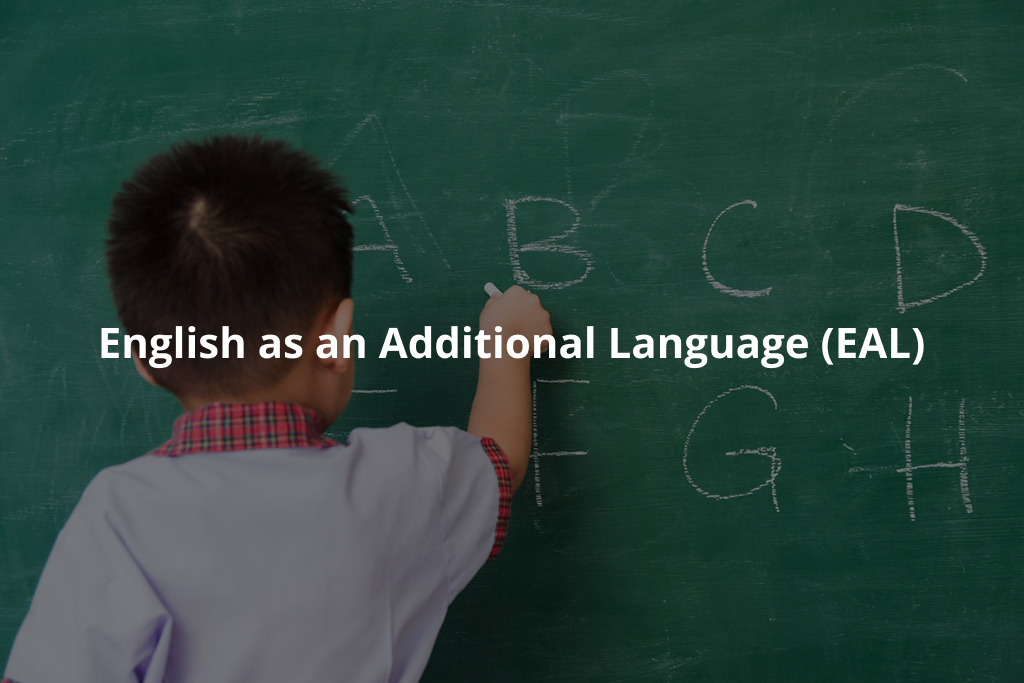
English as an Additional Language (EAL) is an essential support framework designed to help learners develop the language skills they need to succeed academically and socially in English-medium schools. At Regent International School Malaysia, EAL plays a critical role in supporting multilingual learners and helping them thrive from their earliest years through secondary education. Whether students are preparing for an English test, building confidence through an English course or simply learning how to communicate effectively, EAL equips them with the tools they need to succeed. To deepen your understanding of the EAL framework, here is an A–Z glossary of key terms.
A – Academic Language
Language used in school settings, including subject-specific vocabulary, complex grammar, and formal structures necessary for academic success.
B – Bilingualism
The ability to use two languages effectively. Many EAL learners speak a home language and English simultaneously.
C – Comprehensible Input
Content delivered at a level slightly above a learner’s current ability to help them absorb new structures and vocabulary.
D – Differentiation
Tailoring teaching strategies to meet individual learner needs—critical in EAL classrooms where proficiency levels vary.
E – English Proficiency Levels
Stages used to track language development, often progressing from beginner to intermediate to advanced.
F – Fluency
The ability to communicate ideas smoothly and naturally without frequent pauses or language breakdowns.
G – Guided Reading
A structured approach where students read with teacher support to develop comprehension and vocabulary.
H – Home Language Support
Encouraging the use of a student’s first language to support cognitive development and bridge understanding.
I – Immersive Learning
A method where learners are surrounded by English through classroom interaction, multimedia, and real-life engagement.
J – Joint Construction
A learning stage where teachers and students collaborate to produce texts, helping learners understand structure and vocabulary before writing independently.
K – Key Vocabulary
Important words students must understand to access lessons across subjects, such as science, maths, and humanities.
L – Language Acquisition
The natural process of learning a language through exposure, practice, and interaction.
M – Multimodal Learning
Using visual, auditory, and kinaesthetic tools—videos, gestures, drawings, and digital tools—to reinforce understanding.
N – Native-like Pronunciation
A long-term goal for some learners, although EAL focuses more on intelligibility and communication than accent.
O – Oral Language Development
Building speaking and listening skills as a foundation for reading and writing.
P – Phonics
Instruction focused on sound-letter relationships, helping learners decode words and improve reading fluency.
Q – Questioning Techniques
Teachers use open-ended questions to encourage critical thinking, conversation, and deeper language use.
R – Reading Comprehension
The ability to understand, infer, analyse, and evaluate written texts—central to EAL development.
S – Scaffolding
Instructional support given to help learners gradually build independence, such as sentence frames or visual aids.
T – Transitional Language Support
Assistance given as learners move from beginner English to more advanced academic English demands.
U – Universal Design for Learning (UDL)
An approach that ensures lessons are accessible for all learners, including those studying English as an additional language.
V – Vocabulary Acquisition
The ongoing process of learning new words. EAL students often receive explicit instruction in academic and everyday vocabulary.
W – Writing Frames
Templates that help students structure paragraphs, essays, or reports while learning to express ideas coherently.
X – eXpressive Language Skills
The ability to communicate thoughts clearly through speaking or writing—an essential EAL outcome.
Y – Young Learner Language Strategies
Age-appropriate approaches such as songs, stories, games, and interactive activities to help children learn English naturally.
Z – Zone of Proximal Development (ZPD)
A concept by Vygotsky describing what learners can achieve with the right level of support—central to effective EAL teaching.
Summing Up
EAL plays a transformative role in helping students build confidence, fluency and academic language mastery. At Regent International School Malaysia, learners are supported through structured programmes that strengthen communication skills, enrich vocabulary, and prepare them for both everyday interaction and formal assessments such as an English test. Whether students are enrolling in an English course or seeking to strengthen their foundational literacy, Regent offers an environment where learners can grow, adapt, and truly learn with English in meaningful, engaging ways.
If you want your child to thrive in a multilingual world with strong English proficiency and personalised language support, contact Regent International School Malaysia today to explore our EAL programmes, admissions opportunities and tailoured pathways for language success.