 :
 :

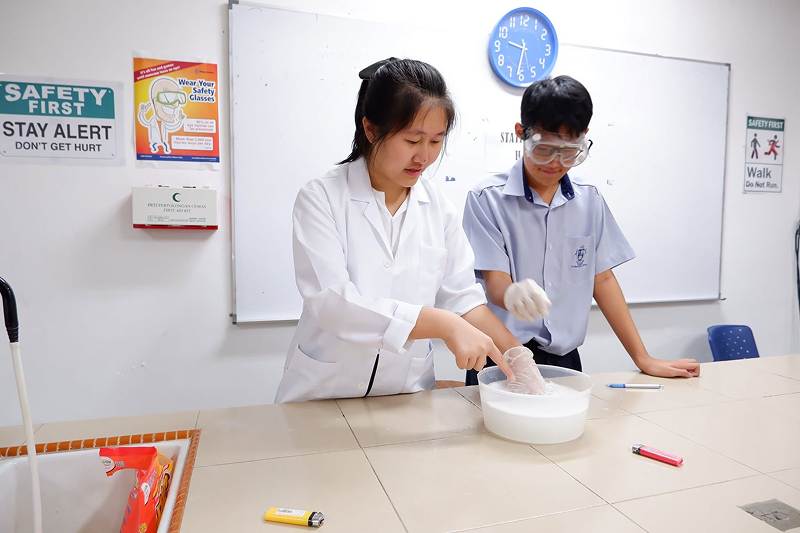
Table of Contents
Article Summary
- STEM and Humanities are different ways of learning, but both are important. STEM builds scientific reasoning, analytical thinking and technology skills. The humanities foster understanding of society, creativity, critical thinking and communication.
- There is more to picking a pathway than grades. Students should choose their subjects based on their interests, strengths and learning styles, aspirations for university and long-term career pathways.
- We at Regent International School Malaysia believe in education that is holistic. We offer a Cambridge curriculum, practical learning experiences, extracurricular opportunities and academic guidance to give students the confidence to make informed educational choices.
Your Choice in Senior High School Education
Choosing subjects for upper secondary school is one of the first major academic decisions students make. This is an exciting milestone, but it can also be a lot to handle. Are you artsy and want to be in Humanities or should you go for Science, Technology, Engineering and Mathematics (STEM)?
The decision leaves many students wondering about college admissions, future jobs and personal interests. Parents may also wonder which route is more secure in terms of career prospects in a rapidly changing world.
The truth is neither path is better…in default. Both offer valuable knowledge and transferable skills to help students prepare for success in higher education and the world of work.
At Regent International School Malaysia, we understand that every student is unique with their talents, interests and ambitions. We offer a balanced education using the internationally recognised Cambridge curriculum, with an emphasis on academic excellence, independent thinking and personal development.
Students of STEM and Humanities know the difference and can feel confident about their future education.
Understanding the STEM Education System
What is STEM Education?
STEM education is a system that integrates four interconnected fields: science, technology, engineering and maths.
STEM education is not about rote memorisation of facts; it’s about getting students to investigate problems, analyse evidence, find solutions and apply theory to the real world.
The four big ones are:
- Science: Investigate and experiment to discover biology, chemistry, physics and the natural world.
- Technology: Computing, digital systems, technological innovation and programming.
- Engineering: The application of science and mathematics to design, build and improve.
- Mathematics: Developing skills in data interpretation, logical thinking, numerical reasoning and problem solving.
At the upper secondary level, these subjects are generally taught as separate subjects and not as a combined STEM subject.
Regent International School Malaysia Learning through subjects is a solid academic foundation for the Cambridge IGCSE pathway. Science and Mathematics build students’ analytical skills and provide knowledge for future study in STEM.
STEM subjects teach key skills.
A major benefit of STEM subjects is that they are all based on logical reasoning and practical problem-solving.
Suppose a student wants to know why a substance conducts electricity. The student can hypothesise, analyse evidence, interpret results and explain findings rather than rote-learning a scientific principle.
This investigative approach develops several important skills:
- Analytical thinking, evidence based decision making.
- A confidence in numbers, a confidence in mathematical reasoning.
- Problem solving and scientific investigation.
- Technological know-how and flexibility
- Perseverance, precision and attention to detail.
These skills are transferable to careers outside of science. Businesses, banks, health care organisations and technology companies are increasingly searching for people who can interpret information and solve tough problems.
At Regent we believe in learning through doing, and we have science labs and technology-enabled classrooms. We try to get students to apply knowledge they have learned in the classroom to meaningful applications and to build their confidence during the course of scientific inquiry.
Career Pathways in STEM
Students who enjoy Mathematics, Science and technology-related challenges may consider careers in:
| STEM Field | Potential Career Opportunities |
| Science | Research scientist, microbiologist, environmental scientist |
| Technology | Software developer, cybersecurity specialist, data analyst |
| Engineering | Civil engineer, mechanical engineer, robotics engineer |
| Mathematics | Statistician, actuary, financial analyst |
| Healthcare | Doctor, pharmacist, biomedical researcher |
Some jobs require a certain university degree, professional training or licence. Students should therefore check the entry requirements before making their final upper secondary subject choices.
For example, a student who wants to study medicine may need Chemistry and Biology, while a student who wants to study engineering needs a strong foundation in Mathematics and Physics.
At Regent, we offer routes for Cambridge IGCSE and A Level that allow students to progress to specialist higher education, subject to course availability and entry requirements.
The Humanities: The Study of People and Society
So what are humanities?
STEM subjects are about the physical, and technological, world. Humanities are about human experience, societies, cultures, languages, ideas and history.
Common Humanities disciplines are the following:
- History: Knowledge of past events and social changes and their effects on the present society.
- Geography: The study of environments, populations and places and the relationship between people and resources.
- Literature: Exploring stories, language, cultural perspectives and human experiences.
- Economics: markets, resources, economic decisions, public policy.
- Global Perspectives: Research, discussion and assessment of different perspectives on global issues.
The humanities and STEM are not totally separate. For example, subjects like Economics and Geography can also be quantitative.
At Regent, we understand that we need to educate our students not only to be aware of academic concepts but also of the world around them. Our Cambridge approach to learning encourages questioning, discussion and independent thinking, helping students develop into thoughtful global citizens.
Humanities teach critical thinking and communication skills.
Studying the humanities is more than reading textbooks or memorising dates in history.
A student might be studying migration because of the climate. They may take into account geographical information, historical trends, economic pressures, and government policies to make a well-rounded argument.
It promotes development of critical thinking, communication and ability to see from different perspectives.
In the humanities, learning can help students to develop:
- Communication skills: Written, verbal and public speaking to clearly articulate arguments
- Critical thinking: Questioning assumptions , evaluating sources , looking for evidence .
- Empathy: Weaving together different cultures, experiences and perspectives.
- Research skills: gathering information, comparing interpretations and conclusions.
- Ethical reasoning: Considering the social impact of choices and policies.
These skills come in handy, especially in jobs requiring teamwork, leadership, negotiation and decision-making.
We believe in holistic education, which goes beyond academics. Students are given the opportunity to express ideas, work together and develop social awareness through performing arts, debate, leadership and community service. These activities supplement the humanities experience.
Career Pathways in Humanities
Humanities subjects can lead to diverse professional opportunities across public, private and creative sectors.
| Humanities Field | Potential Career Opportunities |
| History and Politics | Policy analyst, historian, public administrator |
| Literature and Languages | Journalist, editor, author, communications specialist |
| Economics | Economist, business consultant, market researcher |
| Geography | Urban planner, sustainability consultant, environmental policy specialist |
| Social Sciences | Psychologist, sociologist, social researcher |
| Law and International Relations | Lawyer, diplomat, international affairs specialist |
Many of these occupations require further university education or professional qualifications.
Students also should be aware of the evolving nature of Humanities careers. Digital communications, sustainability policy, international business and user experience research increasingly bring together human understanding and technological knowledge.
At Regent we encourage our students to develop their strengths beyond exam results, knowing that creativity, leadership and communication are important foundations for future success.
STEM vs Humanities: What’s the Difference?
Both pathways stimulate intellectual development but often represent different perspectives on learning.
| Comparison | STEM Pathway | Humanities Pathway |
| Primary focus | Science, technology, mathematical and technical problems | Human society, culture, language and behaviour |
| Core strengths | Analytical thinking, experimentation, numerical reasoning | Critical thinking, communication, interpretation |
| Typical learning methods | Investigations, calculations, practical applications | Research, essays, debates, source analysis |
| Common career directions | Engineering, technology, healthcare, scientific research | Law, journalism, policy, education, communications |
| Suitable interests | Numbers, experiments, technology, designing solutions | Reading, writing, history, social issues, discussion |
| Shared skills | Research, creativity, problem-solving and independent thinking | Research, creativity, problem-solving and independent thinking |
It’s not that one way is harder or more prestigious. The big difference is it’s the subjects that inspire students to learn, grow and discover more.
Here’s how you can find the right track for you:
1. Determine your academic strengths and personal interests.
A student may like one subject best, but another may be his best subject. And likewise, just because you like a subject doesn’t mean it’s the best subject to study in the future.
Use these 3 questions to begin with:
- What are the things I really care about, even when the work is hard?
- Do I like numbers and experiments or research and writing and debate?
- What subjects will be useful for the university courses or careers I might want to pursue?
STEM can be rewarding for students who like to explore scientific questions. If you are interested in human behaviour, global affairs or creative expression, you might prefer the Humanities.
But it’s not right to pigeonhole students who like both into a narrow academic identity.
At Regent we believe that subject choices should be driven by potential, rather than assumptions about academic ability or the prestige of a career.
2. Think Twice Before Signing Up for Extracurricular Activities
Classroom performance is useful, but extracurricular experiences can expose students to interests they have not yet discovered.
For students, participating in STEM activities offers the chance to experience scientific and technical challenges in fun, hands-on ways.
Examples include robotics, coding, science experiments, maths competitions and environmental investigations.
Students in humanities can also get involved in debate, creative writing, theatre, photography, student leadership and community projects.
Our students explore their potential outside the traditional classroom, testing extracurricular and co-curricular opportunities, including STEM-related clubs, performing arts, sports and leadership activities.
These experiences can help build confidence and provide valuable insight before students settle into specific academic pathways.
3. Consider University Requirements and Career Paths
“Students don’t need to know what they want to do when they’re 15 or 16. But seeing possible career paths can help you avoid unnecessary limitations later.
Some university courses have subject-specific entry requirements. In some healthcare courses Biology and Chemistry may be required, and Mathematics and Physics may be required for Engineering.
Many Humanities, Law and Business degrees are open to students from a wide range of academic backgrounds.
Students need to compare university entry requirements, understand subject combinations and also consider whether their choices leave suitable future options.
Our Regent Cambridge education pathway is structured to continue from IGCSE to A Level study, allowing for greater subject specialisation.
4. Find STEAM: Where Science Meets Imagination
Modern education is increasingly recognising that the challenges of the real world do not fit neatly into a single discipline.
That then led to the creation of STEAM, which brings together science, technology, engineering, arts and mathematics.
For example, to design an environmentally sustainable city, one needs engineering knowledge, mathematical computations, an understanding of geography, creative design and knowledge of community needs.
Similarly, building an educational application involves programming, communication, visual design, and knowledge of how people learn.
STEAM demonstrates how you can blend analytical thinking with creativity.
This broader philosophy is evident in our commitment to a holistic education here at Regent. The Cambridge curriculum, combined with academic and extracurricular opportunities, encourages students to develop adaptable skills that are vital for evolving professional environments.
5. Ask for Advice, But Don’t Lose Your Voice
Parents, teachers and academic advisers can offer useful insights, but the final decision should be based on the student’s own aspirations.
A good discussion should cover academic performance, interests, learning styles, possible career pathways and subject prerequisites.
Parents can assist by asking open-ended questions rather than trying to channel their child into a particular profession.
We encourage families to work with the school team to discuss academic progression and subject choices so that decisions are informed, realistic and in line with students’ individual goals.
Final Words: Your Future Is Bigger Than One Road
The choice between STEM and Humanities is an important step in higher secondary education, but it does not define the whole future of a student.
STEM develops scientific reasoning, technological knowledge and analytical problem-solving. The humanities promote communication, cultural awareness, ethical judgement, and critical thinking.
Both roads offer a strong basis for university studies and career progress. The best jobs increasingly require a mix of technical knowledge and creativity and people skills.
At Regent International School Malaysia, we believe education has to be a meaningful experience, helping students find their strengths, build confidence and prepare for opportunities beyond the classroom.
With our Cambridge curriculum, practical learning environment and holistic development opportunities across our Klang, Kuantan and Sungai Petani campuses, our students will gain the knowledge and skills they need for their next academic chapter.
The popular way is not always the right way. It is the one that helps students to grow, to remain curious and to work toward a future that reflects their abilities and ambitions.
Frequently Asked Questions
Most popular STEM subjects at the upper secondary level?
Mathematics, Biology, Chemistry, Physics and Computer Science are common STEM subjects. Availability is subject to the school’s curriculum and subjects on offer. These subjects form the basis for careers in engineering, medicine, technology, scientific research and data analysis.
Which humanities subjects have the best job prospects?
Economics, History, Geography, Literature and Global Perspectives can underpin a range of career pathways. Skills in history and literature can be valuable in law, journalism, communications and public policy. Economics can be a stepping stone to business and finance. Additional qualifications, personal skills and the labour market situation are crucial for career prospects.
Can we move from a STEM education system to Humanities later?
Yes, the subject may be transferable, subject to the curriculum, subjects offered and university entrance requirements. A few Humanities degrees accept students with a STEM background. But without the prerequisite Science or Math, it is harder to get into more specialised STEM courses. Students are encouraged to seek academic advice before changing pathways.
What are some good STEM activities to help students explore their interests?
STEM activities that are good for students include coding projects, robotics challenges, science fairs, math puzzles, engineering design tasks, and environmental experiments. Such experiences help students to learn if they like scientific inquiries, technical problem solving and practical experimentation before they choose advanced subjects.
Step Up and Plan Your Academic Future with Regent
STEM vs Humanities: Confused between them? What is the right way for your child?
At Regent International School Malaysia we understand that the choice of upper secondary subjects is a decision that has to be made with due consideration of academic strengths, personal interests and future aspirations.
Book a counselling session with our academic advisers to discuss appropriate Cambridge subject pathways, understand academic progression and make informed choices for your child’s future.
Contact our admissions team today or arrange a visit to any of our campuses to learn more.