 :
: :
:
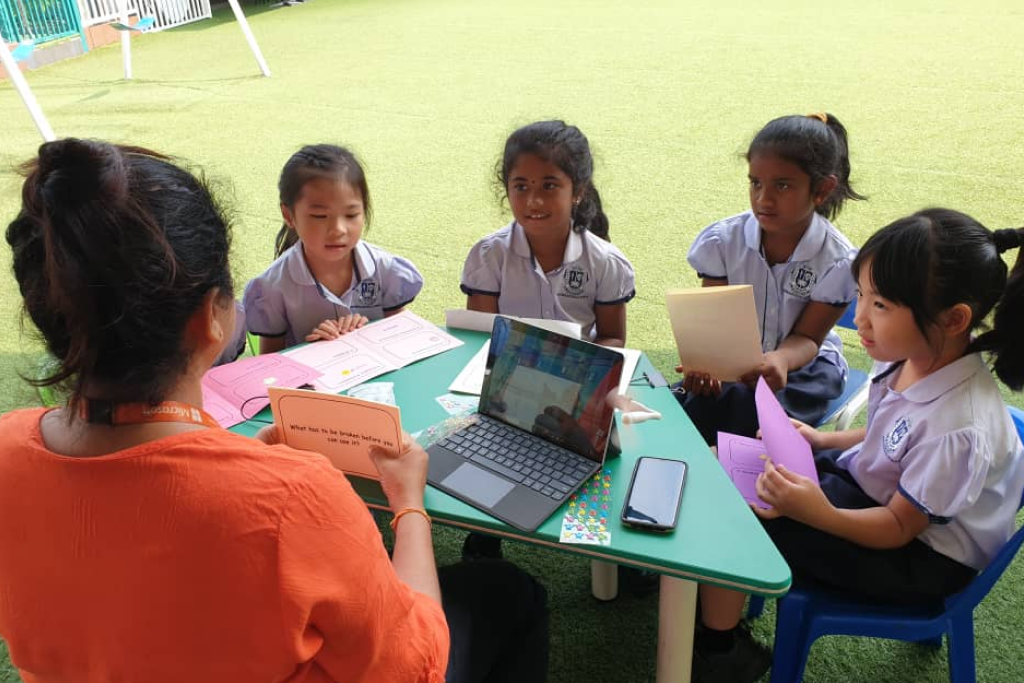
Table of Contents
Teaching shapes is one of the easiest (and most enjoyable) ways to build early maths confidence. Shapes are everywhere—windows, plates, road signs, tiles, toys—and once children start noticing them, they’re already learning shapes in mathematics.
This guide walks you through a practical, step-by-step approach you can use at home or in an international kindergarten in Malaysia, with clear activities for different ages and learning styles. We’ll also share how Regent International School Malaysia approaches early learning through a play-based EYFS-aligned environment—ideal for developing early numeracy, language and confidence.
Step 0: Start with the Right Goal (Not Perfection)
Before you begin, remember: the aim isn’t to “memorise” shapes. It’s to help children:
- Recognise shapes in the real world
- Use the correct names of shapes
- Describe features (sides, corners, curves)
- Compare and sort shapes logically
This is foundational for later maths skills such as patterns, symmetry, measurement and geometry.
Step 1: Introduce the Main Types of Shape (2D First)
Begin with common types of shapes children see daily:
2D shapes (flat)
- Circle
- Square
- Triangle
- Rectangle
- Oval
3D shapes (solid)
- Sphere
- Cube
- Cylinder
- Cone
Tip: Always begin with 2D shapes for preschoolers, then layer 3D shapes once recognition is steady.
Step 2: Teach Shape Names Using Real Objects
Children learn fastest when shapes are linked to objects they can touch.
Try this “Shape Hunt” routine:
- Circle: plate, clock, coin
- Square: napkin, tile, sticky note
- Triangle: pizza slice, bunting flag
- Rectangle: book, phone, door
- Oval: egg, mirror
How to say it
- “This plate is a circle. Circles are round.”
- “This book looks like a rectangle. Rectangles have 4 corners.”
This kind of real-world learning fits naturally with play-based early years teaching. Regent International School Malaysia highlights guided play and hands-on experiences in its EYFS approach, supporting early numeracy and holistic development.
Step 3: Move from Objects to Pictures (Matching Games)
Once kids can name shapes in real life, transition to picture cards.
Simple matching ideas
- Match object → shape card (e.g., ball → circle)
- Match shape card → shape outline
- “Same shape, different size” matching
Keep it short: 5–10 minutes is enough for preschool attention spans.
Step 4: Add “Shape Talk” (Features, Not Just Names)
This is where the concept of shapes in mathematics starts to grow.
Use child-friendly language:
- “Corners” (vertices)
- “Sides”
- “Curved edge”
- “Pointy” (for triangles, cones)
Mini prompts:
- “How many corners does a square have?”
- “Which shape has no corners?”
- “Which one has a curved side?”
At Regent’s preschool programme, numeracy is supported through structured yet playful experiences designed to build confidence and curiosity—exactly what “shape talk” encourages.
Step 5: Create Shapes Through Art, Building and Movement
Kids remember shapes better when they make them.
Art-based (great for EYFS-style learning)
- Make a triangle collage with cut paper
- Paint circles using bottle bottoms
- Draw shapes with finger paint or sand trays
Building-based
- Use blocks to build a cube tower
- Make a rectangle “road” with LEGO
- Create a 2D shape using popsicle sticks
Movement-based
- “Make a circle with your arms”
- “Walk in a triangle” (tape triangle on the floor)
- “Freeze in a square” game
These activities align well with EYFS principles of learning through play, creativity and hands-on exploration—an approach Regent emphasises in its early years offering.
Step 6: Sort and Classify (The Big Thinking Skill)
Sorting is a powerful early maths skill.
Sorting ideas
- Sort by shape (all circles together)
- Sort by size (big circles vs small circles)
- Sort by attribute (shapes with corners vs without corners)
Bonus question: “Why did you put these together?”
This builds early reasoning—key for future maths success.
Step 7: Apply Shapes to Everyday Life (The “Aha!” Stage)
To make learning stick, connect shapes to daily routines:
- Cooking: “This cookie cutter is a star.”
- Shopping: “That sign is a triangle.”
- Outdoors: “The wheel is a circle.”
- Story time: “Find a rectangle on this page.”
This is especially valuable in a preschool in Kuala Lumpur, where children experience rich, varied environments and can learn through observation and exploration. Regent’s play-based early years programme is designed to foster this kind of curiosity and real-world connection.
How Regent International School Malaysia Supports Early Shape Learning
If you’re exploring the best schools in Malaysia for early learning, look for a programme that supports early maths through play, language and hands-on discovery.
Regent International School Malaysia offers an Early Years programme for children aged 3–5, with a play-based approach that supports self-awareness, social skills and foundational learning. It also highlights EYFS-aligned preschool experiences that develop numeracy, literacy, creativity and social-emotional growth through guided play, storytelling and interactive activities.
Final Thoughts
Teaching shapes doesn’t need worksheets or pressure. With a simple, step-by-step routine—see it, say it, make it, sort it, use it—children naturally learn types of shape, master the names of shapes, and develop strong foundations in shapes in mathematics.
For parents considering an international kindergarten in Malaysia or a nurturing preschool in Kuala Lumpur, Regent International School Malaysia offers a supportive EYFS-based environment where early numeracy skills are developed through play, exploration and confidence-building routines.
Ready to see how Regent supports early learning through play-based maths and discovery? Book a school tour or start your enquiry via Regent’s admissions page today.
FAQs
Start with 2D shapes: circle, square, triangle, rectangle and oval. Once those are strong, introduce 3D shapes like sphere, cube and cylinder.
Use real objects daily, focus on one or two shapes per week, and add “shape talk” (corners, sides). Repetition in short, fun bursts works best.
A play-based approach aligned with the Early Years Foundation Stage works well: hands-on exploration, storytelling, art, movement and sorting games—similar to Regent International School Malaysia’s early years approach.