:
: :
:

Math doesn’t have to be dry, repetitive or stressful. For young learners in primary schools in Kuala Lumpur and beyond, turning numbers into play can unlock confidence, curiosity and real understanding. Whether through math games for kids, interactive maths playground games or cool math games online, making mathematics enjoyable lays a solid foundation for future learning, especially within structured frameworks such as the Cambridge Primary Programme. In this blog, we have explored practical ways to make math fun, with insights from how Regent International School incorporates engaging learning and how we at Regent bring creativity and joy into numeracy instruction.
Why Fun Matters in Math Learning
Children learn best when they’re engaged and excited. Games and playful activities:
- Strengthen problem-solving skills
- Boost motivation and resilience
- Reduce math anxiety in early years
- Reinforce concepts through repetition in a playful context
This approach aligns well with the Cambridge Primary Programme, where understanding and confidence are emphasised alongside mastery of mathematical skills. Regent’s primary framework ensures that learners build fundamentals in mathematics through curiosity and structured progression rather than rote memorisation.
1. Play Hands-On Math Games for Kids
Active involvement is key to making math memorable. Try these fun activities:
Number Hunt
Hide number cards around the room or playground and ask children to find them in sequence. This works especially well with primary students who thrive on physical activity paired with learning.
Dice Fun
Use dice to practice addition, subtraction or even multiplication games. For example, roll two dice and add the numbers—but give bonus points for creative ways to get the total (e.g., drawing shapes representing each number).
Card Games
Simple card decks can become tools for comparing numbers, ordering from smallest to largest, or practising greater-than/less-than concepts.
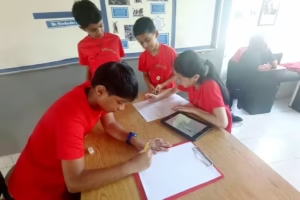
At Regent International School, mathematics is embedded within daily learning routines and enriched with classroom interactions that make abstract ideas tangible. Small group work and teacher-led games help students feel confident with numbers early on.
2. Bring Maths to the Playground
Math doesn’t have to be confined to desks! Maths playground games turn outdoor time into a learning opportunity.
Hopscotch Math
Draw a hopscotch grid with numbers and have students solve equations as they jump. For example, shout “3 + 2” and ask them to hop to the correct answer.
Math Relays
Split the class into teams and give simple problem cards. Each team runs to a station, solves a problem, and tags the next teammate. This builds enthusiasm and healthy competition.
Shape Dash
Call out shapes (circle, square, triangle) and have learners run to physical cut-outs placed around a play area. It’s a great way to introduce geometry concepts in a lively environment.
We’ve found that taking maths outdoors not only makes the subject dynamic, it also encourages teamwork, communication and physical wellbeing – important elements in holistic learning.
3. Use Cool Math Games Online
Digital games can make learning interactive and visually stimulating. Websites and apps often offer:
- Puzzle challenges
- Timed drills with rewards
- Animated tutorials that explain concepts
- Multiplayer modes for peer engagement
While screen time should be balanced, carefully selected Cool math games help reinforce classroom teaching in an enjoyable way. These platforms often adapt to skill level and provide instant feedback, which is ideal for young learners.
4. Integrate Cambridge Primary Programme Activities
Curricula including the Cambridge Primary Programme integrate mathematics with enquiry-based learning and cross-curricular projects. Rather than teaching maths in isolation, students explore mathematical thinking within real contexts.
For example:
- Measuring ingredients in a cooking project (fractions and ratios)
- Mapping distances in geography (spatial reasoning)
- Designing classroom layouts (geometry + estimation)
Regent International School uses the Cambridge framework to balance academic rigour with exploration and creativity, ensuring students are confident in their mathematical skills while also developing broader competencies.
5. Encourage Math Through Real-Life Situations
Math is everywhere—shopping, cooking, travel planning or even playing board games.
| Activity | Description |
| Shopping simulation | Give learners a budget and let them “buy” items with play money to practice addition and subtraction. |
| Recipe maths | Ask them to double or halve a recipe. |
| Time challenges | Use clocks and timers to explore elapsed time. |
These daily math experiences help students see relevance and purpose in numbers beyond worksheets.
6. Celebrate Progress With Rewards and Reflection
Make sure to recognise effort, not just correct answers. You might:
- Give “Math Star” stickers
- Display a problem-solving wall with student work
- Host a mini “Math Olympics” with certificates
Reflection is also valuable: Ask students what strategy they used or how they solved a problem. This builds metacognitive skills and reinforces learning.
At Regent, we use positive reinforcement within fun learning environments to build not just competence but confidence in mathematics. Regular feedback and encouragement help learners take ownership of their progress.
Choosing the Best Environment for Math Learning
Parents often look for schools that promote engaging maths learning alongside broad academic foundations. Among the best private primary schools in the region, institutions that combine strong teaching with creative, game-based learning environments stand out.
When exploring primary schools in Kuala Lumpur, consider curricula that:
- Embrace interactive learning
- Use games and play for core concepts
- Integrate maths across subjects
- Offer personalised support
Regent International School is recognised among the best international schools Malaysia offers, delivering structured yet engaging lessons that make mathematics both meaningful and fun.
Final Words
Making math fun for primary and lower secondary students doesn’t require magic—just creativity, play, and a willingness to explore numbers in hands-on ways. From math games for kids and maths playground games to engaging cool math games and curriculum-inclusive projects, there’s a world of possibilities that can boost interest and understanding.
At Regent, we’re passionate about helping young learners enjoy mathematics while developing strong foundational skills that support lifelong learning.
Want to see how we make math fun and effective? Visit our campus to experience our learning approach firsthand. Contact us today to explore how we nurture mathematical confidence in every child!