:
: :
:
This article highlights the importance of:
Applying straightforward strategies and school partnership, which can help children become confident, informed stewards of the planet.
Embedding environmental education into everyday learning helps students see connections between classroom life and real-world issues.
Tasks such as writing an environment essay, participating in sustainability education programmes and using a dedicated environmental learning space (an environmental education centre) make learning active and meaningful.
Home, school and community activities can all reinforce sustainability education, turning theory into practice.

How to Incorporate Environmental Education into Everyday Learning
Environmental awareness is more than a subject—it’s a mindset. As we face global challenges such as climate change, biodiversity loss and resource depletion, equipping children with the understanding and motivation to act responsibly has never been more important. Whether through writing an environment essay, joining sustainability education programmes or using a dedicated environmental education centre, everyday learning can become a platform for change.
Below are practical strategies for parents and educators, followed by how Regent International School Malaysia embeds sustainability into its ethos and practice.
1. Use Writing and Reflection to Embed Learning
One of the most effective tools for environmental education is writing. Asking children to compose an environment essay encourages them to articulate ideas, reflect on their actions and propose solutions.
Implementation ideas:
- Assign short environmental essay tasks. For example, “How can our family reduce plastic use?” or “What happens when forests are lost?”
- Encourage older students to research local sustainability challenges and set out proposals in essay format.
- Build reflection into regular schedules: after a nature walk, gardening activity or recycling drive, ask children to write what they observed, what surprised them and what they might do differently.
Why this helps:
Writing deepens comprehension. When students put their thoughts into words, they process concepts more meaningfully and become active thinkers rather than passive recipients.
2. Integrate Sustainability Education Programmes into Daily Life
Sustainability education programmes give structure, purpose and momentum to environmental learning. These programmes can be school-based or community-linked.
What it might look like:
- Weekly eco-club meetings where students track waste, energy or water use.
- A term-long project on biodiversity or climate action, culminating in a presentation or campaign.
- Partnerships with local NGOs, councils or environmental bodies for field visits or joint activities.
The benefit:
These programmes move beyond abstract learning and into genuine action. Students become contributors rather than observers—and that builds ownership of sustainability.
3. Create a Dedicated Environmental Education Centre or Space
Having a physical space—such as a greenhouse, garden, eco-lab or environmental education centre—makes sustainability tangible.
How to use such a space:
- Grow herbs or vegetables and link the activity to science, maths and food education.
- Set up compost bins, recycling stations or a small water-harvesting system and use them in classroom discussion or writing tasks.
- Rotate monitoring tasks: students measure soil moisture, log species observed, record recycling weights.
Why it works:
When children work in a dedicated space, the abstract idea of “the environment” becomes concrete. They see cause and effect, engage with materials and develop responsibility for the space.
4. Make Sustainability Cross-Curricular and an Everyday Task
Environmental education is not just a science topic—it permeates every subject and every day.
Examples:
- Maths: calculating household energy use or carbon footprints.
- Geography: mapping local habitats, understanding land-use changes.
- English: writing persuasive texts on sustainability issues.
- Art: using recycled materials to create sculptures or posters.
- Homelife: discussing how everyday choices—transport, diet, waste—impact the environment.
Tip for parents and educators:
Look for “teachable moments” every day. A storm? Talk about climate change. Shopping? Discuss packaging and waste. A nature walk? Note species diversity, ecosystems and human impact.

5. Link to Real-World Impact and Encourage Student Voice
Learning becomes more meaningful when children understand their actions matter.
Ways to lift impact:
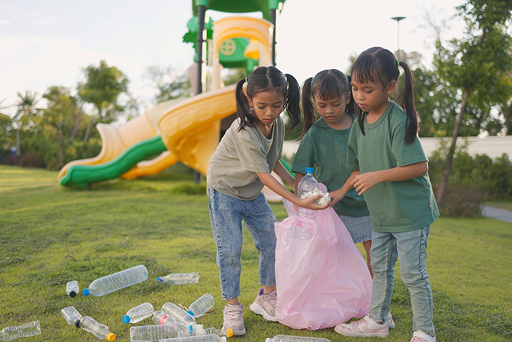
- Organise a local clean-up, tree-planting or reuse drive.
- Encourage students to lead campaigns (posters, social-media, assembly talks).
- Use the school’s environmental education centre to monitor changes over time (waste reduction, biodiversity counts).
- Invite the community in: parents, neighbourhood, local council.
Outcome:
Students develop agency. They don’t just learn about sustainability—they practise it, advocate for it and lead it.
How Regent International School Malaysia Embeds Environmental Education
Regent International School Malaysia has made sustainability an integral part of its identity. According to its mission, Regent aims to “ignite passion within our students and instil in them a strong sense of respect for the world we all inhabit.”
Key USPs that align with environmental education:
1. Values-Based and Holistic Curriculum
Regent goes beyond academic rigour to shape respectful, responsible global citizens. Sustainability is a declared value.
2. Sustainability Education Programmes and Initiatives
Regent students engage in concrete actions: one project turned fruit peels into insect spray and compost, reducing waste and nurturing school greenery. At Regent Klang, CCA clubs adopted UN Sustainable Development Goals, including sustainable consumption and production, with creative student-led campaigns.
3. Environmental Leadership and Recognition
Regent adopts various sustainability measures from time to time to fulfill its responsibilities towards environmental conservation.
4. Curriculum Integration and Facilities
While not explicitly labelled “environmental education centre,” Regent’s structured programmes and green initiatives offer practical spaces and tasks for sustainability learning—effectively fulfilling that role.
Combining strong academic programmes (Cambridge curriculum), holistic values and real-life sustainability action, Regent stands out as a school where sustainability education is built into the fabric of student life.

Make Sustainability Every Day
Incorporating environmental education into everyday learning empowers children to become active, conscientious, and informed members of society. From writing an environment essay to participating in sustainability education programmes and utilising an environmental education centre-style space, every activity matters.
Choosing a school like Regent International School Malaysia—one committed to sustainability, academic excellence and holistic development—amplifies this opportunity. Regent’s strong curriculum, values-based ethos and real-world eco-initiatives make it an ideal environment for young learners to thrive.
Do you want your child to learn in a setting where sustainability isn’t just taught—it’s lived? Book a school tour at Regent International School Malaysia today and discover how your child can belong to a community shaping the future for our planet. Need more details? Enquire Now!
FAQs
1. What is an environment essay and why is it useful?
An environment essay is a written task where students explore environmental issues, reflect on actions and propose solutions. It helps deepen their thinking and connects classroom learning to real life.
2. What are sustainability education programs in schools?
These are structured programmes that embed sustainable practices, student-led initiatives, eco-actions and cross-curricular projects. They move learning from theory to practice.
3. How does sustainability education differ from traditional environmental education?
Sustainability education emphasises long-term change, systems thinking and future readiness, rather than just facts about nature. It focuses on how humans live and interact with the planet.
4. What is an environmental education centre and can it exist in a school?
An environmental education centre is a dedicated physical space (garden, eco-lab, compost-centre) where students engage directly in sustainability tasks. In schools, any practical sustainability space can function as one.
5. How can everyday learning include environmental education?
By integrating eco-themes across subjects (writing essays, maths calculations, art projects), using real-world examples (recycling, energy use), and providing hands-on tasks (composting, monitoring) at home and school.